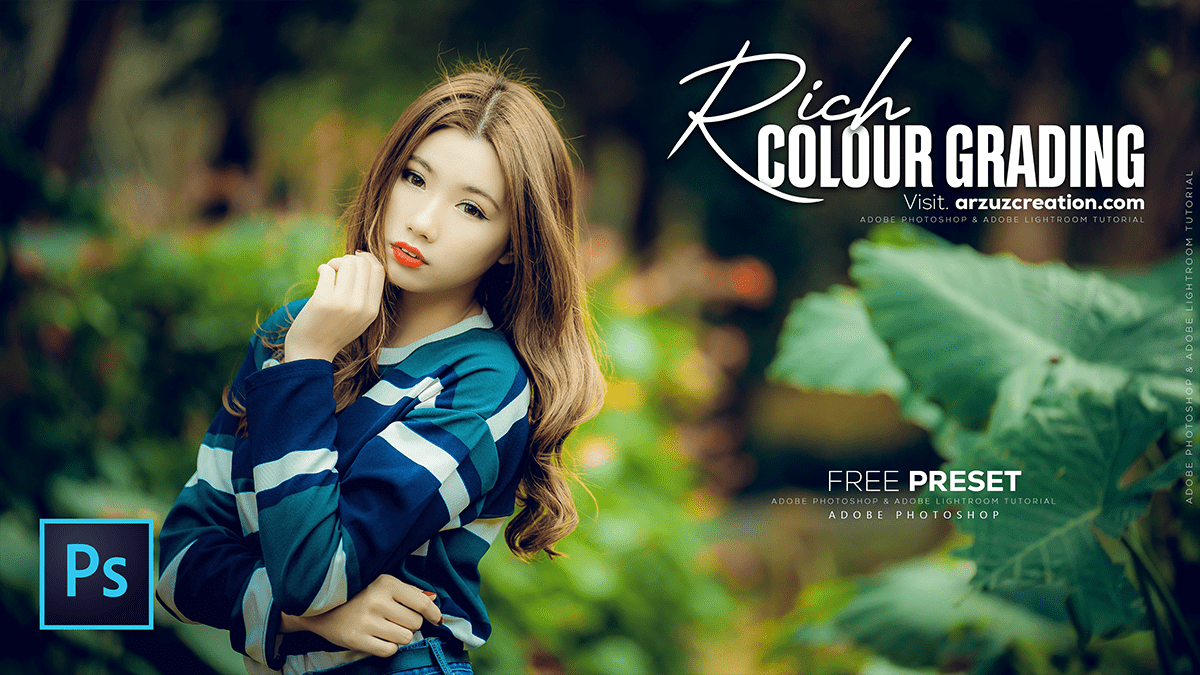
Rich Colour Grading Adobe Photoshop Camera Raw Filter 2025,
Therefore, that’s a great request! Achieving a “rich” color grade often involves a mix of adjustments to contrast, saturation, and targeted color shifts, particularly in the Color Grading panel of the Camera Raw Filter.

In other words, here is a general approach to creating a rich color grade in Photoshop’s Camera Raw Filter (which is also available in Lightroom Classic):
Rich Colour Grading Adobe Photoshop Camera Raw Filter 2025,
🎨 Rich Color Grading Steps in Camera Raw:
1. Initial Tonal & Detail Corrections (The “Basic” Tab)
Therefore, before adding a color style, you need a solid foundation.
- Exposure & Contrast: Adjust to ensure a good range. Increase Contrast for punchiness, or use the Tone Curve for a custom contrast profile (often an S-curve for more richness).
- Highlights & Shadows: Therefore, recover detail in the bright and dark areas. Reducing Highlights and increasing Shadows slightly can create a more balanced, HDR-like look, which can contribute to richness.
- Whites & Blacks: Therefore, set your white and black points for maximum dynamic range without clipping.
- Clarity: In other words, Increase Clarity (often between 5 +10 to $+30) to enhance mid-tone contrast and texture, which adds a feeling of richness.
- Vibrance & Saturation:
- Therefore, slightly increase Vibrance (e.g., 1 +10 to +20): This boosts less-saturated colors without overdoing skin tones.
- In other words, you may also increase Saturation modestly (e.g., 2 +5 to +15) depending on the look you want.
Rich Colour Grading Adobe Photoshop Camera Raw Filter 2025,
2. The Key: Color Grading Panel (Three-Way Color Wheels)
In other words, this is where you target specific color shifts for a cinematic or rich look. The key is to add complementary colors to shadows and highlights. (e.g., warm highlights and cool shadows).
- Open the Color Grading Panel: Look for the icon with three colored circles.
- Shadows: Click and drag the center circle in the Shadows wheel.
- Common Rich Look: Drag toward Blue or Cyan (cool colors). This is a classic cinematic technique that separates the shadows from the warmer midtones/highlights.
- Adjust: Fine-tune the Hue (color angle) and Saturation (distance from the center) of the wheel. Adjust the Luminance slider (below the wheel) to darken or lighten the color in the shadows.
- Highlights: Click and drag the center circle in the Highlights wheel.
- Common Rich Look: Drag toward Yellow or Orange (warm colors). This works well with cool shadows.
- Adjust: Fine-tune the Hue, Saturation, and Luminance of the highlights.
- Midtones: This is optional. You can leave it neutral, or nudge it slightly toward the Highlights color to blend the effect.
- Blending & Balance:
- Blending: Adjusts the amount of overlap between the shadow, midtone, and highlight color grades. A lower value creates sharper color separation; a higher value blends them more smoothly.
- Balance: Controls the balance of the overall color grade effect between the shadows (left) and highlights (right).
Rich Colour Grading Adobe Photoshop Camera Raw Filter 2025,
3. Targeted Color Adjustment (HSL/Color Mixer)
In other words, to make certain colors pop or be more subdued (which adds to the richness), use the HSL/Color Mixer tab.
- Saturation: Increase the Saturation of specific colors you want to emphasize (e.g., greens, blues, or reds).
- Luminance: Adjust the Luminance (brightness) of colors to create depth. For example:
- In other words, slightly decrease the Luminance of Blues and Greens for a deeper, more lush look.
- However, slightly increase the Luminance of Reds or Oranges (often affecting skin tones) to make them stand out.
Rich Colour Grading Adobe Photoshop Camera Raw Filter 2025,
Pro Tip: Smart Object:
However, for non-destructive editing, make sure to convert your layer to a Smart Object (Filter > Convert for Smart Filters) before applying the Camera Raw Filter (Filter > Camera Raw Filter). This allows you to double-click the filter in the Layers panel at any time to re-edit your settings.
In conclusion, would you like me to find a specific video tutorial that demonstrates a rich or cinematic color grading workflow in Camera Raw?
